





“I Was Almost in Analysis Paralysis Mode” - How Vinay Stopped Putting Off Diversification

Vinay
Tech executive, former Meta and Pure Storage · Client
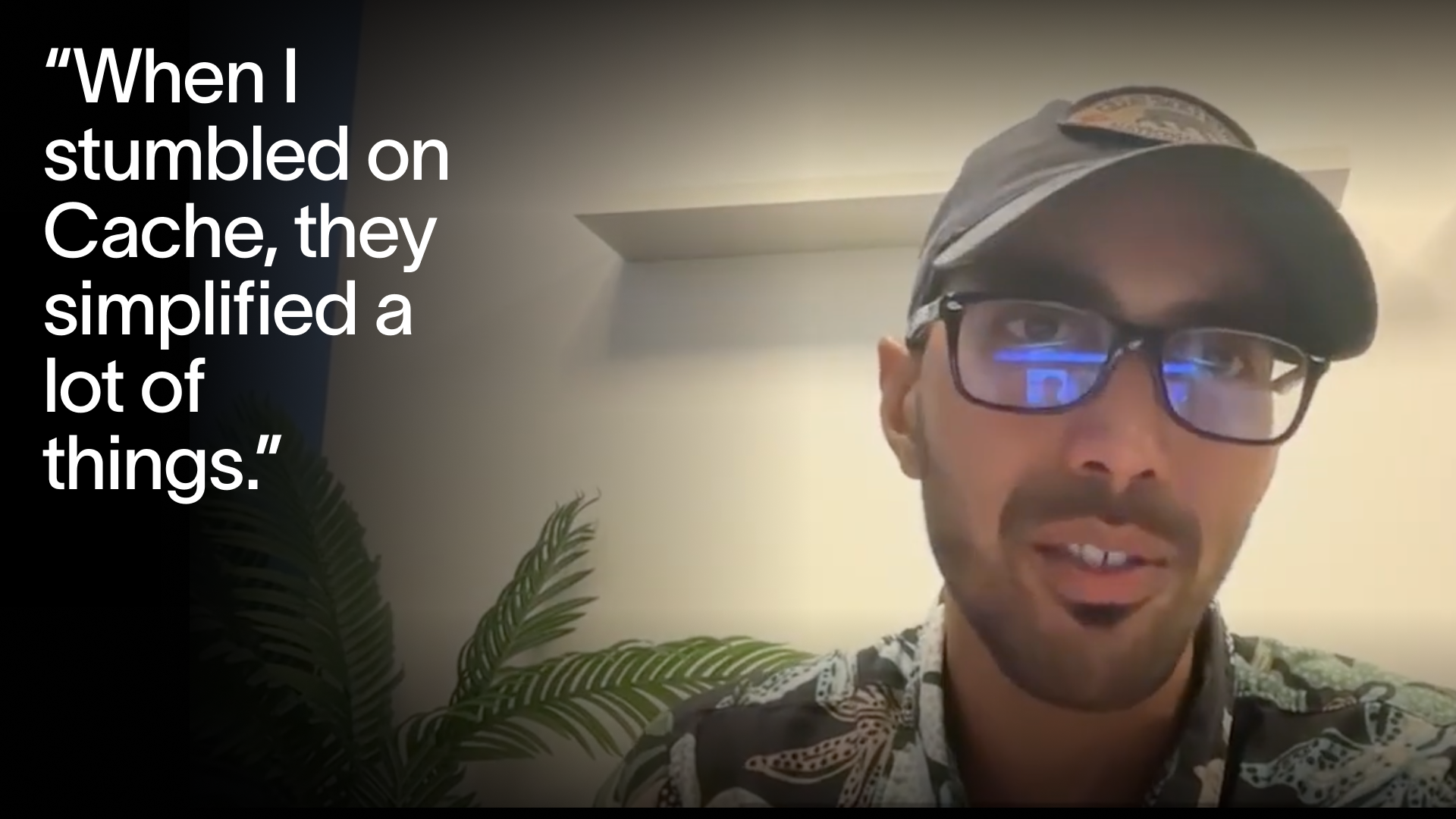

"I was almost in analysis paralysis mode," Vinay says. "I wanted the diversification. I didn't want to sell and take a tax hit immediately. And that just meant that I was kicking the can down the road."
Vinay built his career across startups and large tech firms, including Meta and Pure Storage.
"As someone that believed in the company, I never sold the stock as I ought to when it starts vesting," he says. "Before I knew it, 95% of my [net worth] was in one company."
His advisor's directive
His advisor at the time recommended he address his concentrated position.
"The first thing my advisor basically said is, you have to diversify very aggressively," Vinay recalls.
The logic was clear, however the instrument they suggested was a straight sale.
"Sell it and then invest it in S&P 500 or something like that," he says. "That meant that I'm taking a big tax hit."
So he waited.
Traditional options felt broken
Vinay first heard about exchange funds offered by a large national bank.
"But then the minimums that were needed to participate, and there was a very strict time window," he says. "It was almost like you had to decide in the next month and the next window is gonna happen way later."
He talked to another traditional exchange fund provider. Same story.
"I was kind of surprised how limited the options were and how strict the timelines were as to when you could participate," he says. "One of them said, hey, we just closed our window. We'll come back to you six months from now."
All of it took flexibility away from how he wanted to diversify.
What Cache did differently
Vinay found Cache through a friend and independent research. What stood out was clarity.
"When I stumbled on Cache, I think it made it super easy for me to understand. I think they simplified a lot of things," he says. "I understood all the different possible scenarios. What does it mean for me to exit the fund? And that really helped, I would say, calm me down a bit and then be more comfortable participating."
He started small, treating the initial allocation as a test.
"The whole experience was so smooth and simple," he says. "I then started continuously diversifying over time."
Every three to six months, if a position felt concentrated, he would reach out and transfer funds over. The cadence gave him more control over participation timing.
"With Cache, the beauty is it's sort of continuous," he says. "They're constantly looking at bringing in more to keep the diversification the right way with the benchmark.”
The emotional shift
Vinay is candid about how concentration affected him day to day. He remembers one quarter when his company posted weak results and the stock dropped sharply.
"That was very painful to see," he says. "Because then your entire allocation is very heavily concentrated."
Diversification changed that.
"I no longer look at stocks very regularly," he says. "Until now, I would be eager to see how the stock is performing and I would ride the highs and lows of the stock, but now it's much more calmer because it's diversified and it's basically what the whole market is doing."
What he tells others
"I think the first question is, am I going into my retirement with this one concentrated stock?" Vinay says.
Once the answer becomes no, the real problem is timeline.
"What do you do and how quickly do you do it?"
His view is pragmatic. Speaking of exchange funds:
"These instruments exist, right? […] But they were just not accessible to everybody in a very easy to consume fashion," he says.
"I'm super glad Cache exists because if not for that, maybe I might have been still kicking the can down the road."
The Cache Exchange Fund can help.


Heading
Heading 1
Heading 2
Heading 3
Heading 4
Heading 5
Heading 6
Lorem ipsum dolor sit amet, consectetur adipiscing elit, sed do eiusmod tempor incididunt ut labore et dolore magna aliqua. Ut enim ad minim veniam, quis nostrud exercitation ullamco laboris nisi ut aliquip ex ea commodo consequat. Duis aute irure dolor in reprehenderit in voluptate velit esse cillum dolore eu fugiat nulla pariatur.
Block quote
Ordered list
- Item 1
- Item 2
- Item 3
Unordered list
- Item A
- Item B
- Item C
Bold text
Emphasis
Superscript
Subscript
Heading 1
Heading 2
Heading 3
Heading 4
Heading 5
Heading 6
Lorem ipsum dolor sit amet, consectetur adipiscing elit, sed do eiusmod tempor incididunt ut labore et dolore magna aliqua. Ut enim ad minim veniam, quis nostrud exercitation ullamco laboris nisi ut aliquip ex ea commodo consequat. Duis aute irure dolor in reprehenderit in voluptate velit esse cillum dolore eu fugiat nulla pariatur.
Block quote
Ordered list
- Item 1
- Item 2
- Item 3
Unordered list
- Item A
- Item B
- Item C
Bold text
Emphasis
Superscript
Subscript
The Cache Exchange Fund can help.


Make better decisions for managing your large stock positions.
Sign up to receive all our insights and data.
Make better decisions for managing your large stock positions.
Sign up to receive all our insights and data.