

“Somebody Actually Told Me That’s a Scam” - Jonathan’s Path to Diversifying Microsoft Stock

Jonathan Sorensen
Engineer, former Microsoft

Jonathan Sorensen spent nearly a decade at Microsoft (MSFT), long enough for compensation to shift from salary to equity, and for equity to become real wealth. Microsoft wasn't a failing company or a cautionary tale. It was an excellent stock to own.
"Microsoft has a lot of upsides to it," he says, "especially with everything going on with AI in the market."
The sabbatical
Jonathan treated diversification like a research project. At one point, he stepped away from work entirely to study his options.
"I actually took a bit of a sabbatical from work and really dove deep into finances," he says.
His first conclusion was uncomfortable.
"Initially, I was looking into taking a huge tax bill and watching a lot of the gains and appreciation I had made just vanish overnight."
Selling solved concentration immediately. It also created a wealth transfer to the IRS that felt disproportionate.
That pushed him toward exchange funds. The concept made sense. The execution didn't.
Why traditional funds felt inaccessible
"They want a very large, large, large position in the millions upon millions of dollars to be considered," he says. "And they had significantly higher fees."
He also ran into structural limitations.
"I'm locked for a long time. If I try to withdraw early, there's penalties and it just didn't feel like the right solution."
So he asked a broader question: whether exchange funds themselves were the issue, or whether the delivery model was outdated.
"I thought, is there a more modern take on this? Is someone else doing this besides the very large players?"
Finding Cache
"By random chance looking around the internet, I found Cache and started digging into it," Jonathan says.
The differences were structural.
"There's much lower rates here. A lot of other funds want millions or five million dollars of stock positions. That was just a no-go for a lot of folks like me."
He's careful to contextualize that.
"Yes, I've been in engineering in the Valley for a long time. But I'm not an early joiner or vice president somewhere."
Jonathan verified everything he could. Documentation. Regulatory status. Leadership backgrounds. Direct conversations.
"I reached out and said, are you looking for Microsoft stock? What is your background? Can you send me details?" he says. "I dove into what their previous experience was."
He confirmed the fund was managed through a third party with succession planning in place.
One year in
Jonathan has been invested for over a year.
"My portfolio actually beat Microsoft over the same duration," he says. "By about five or six percent."
He's careful not to overstate it. Microsoft could outperform again. The point was structural.
"Not only was I happy to diversify," he says, "it actually beat one of the hottest growing stocks right now."
The skeptics
Jonathan tested his conclusions with peers across the tech industry before committing.
"I chatted with quite a few folks in tech and said, check out this platform. What do you think?" he says.
Not everyone was convinced.
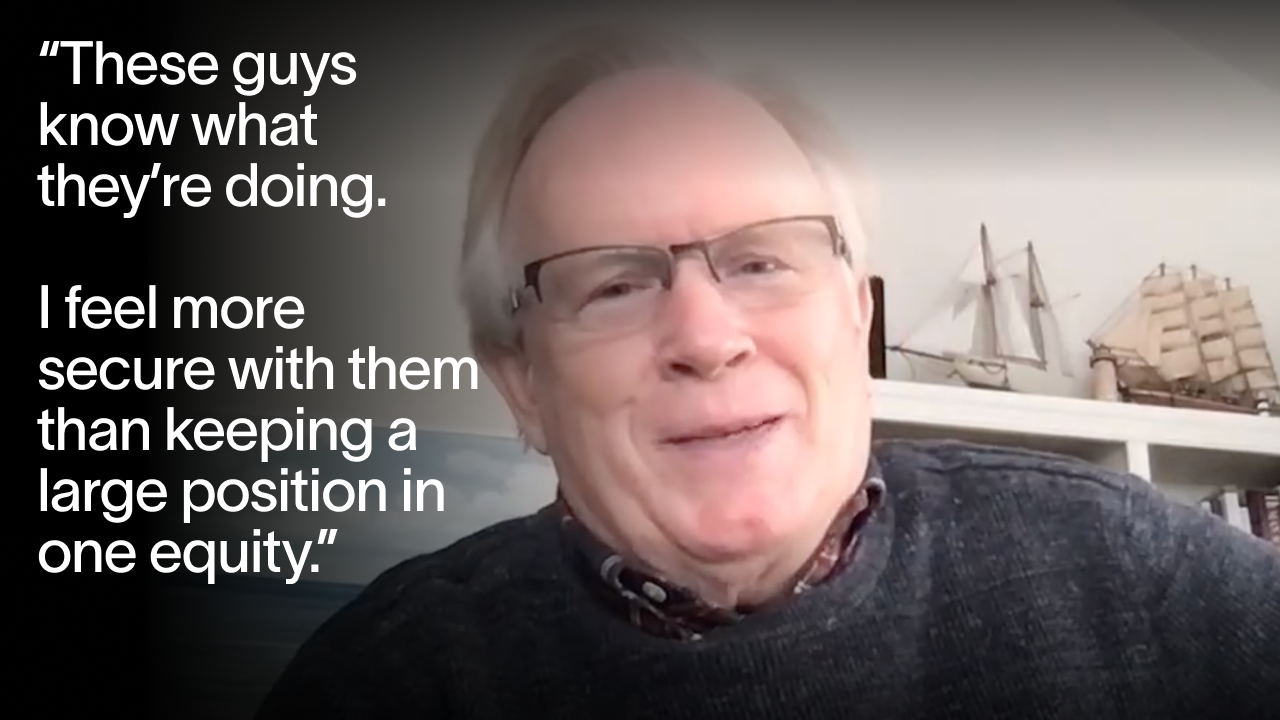
"Somebody actually told me that's a scam," he says. "I was like, no, this is not a scam."
The peer dismissing it was using traditional advisors. In hindsight, the skepticism reinforced his conviction.
"It was almost reassuring," he says. "That one of the big players was worried about this."
What he hears from others
Jonathan has become an informal reference for peers considering diversification. The most common feedback isn't skepticism. It's hindsight.
"People come back and say, why didn't I do this a year ago?" he says.
He frames it as timeline management, not market timing.
"You can't time the market. Seven years is a long time. But you get the financial security of diversification without the tax bill."
The Cache Exchange Fund can help.


Make better decisions for managing your large stock positions.
Sign up to receive all our insights and data.